Global Media on the Second Round of French Elections

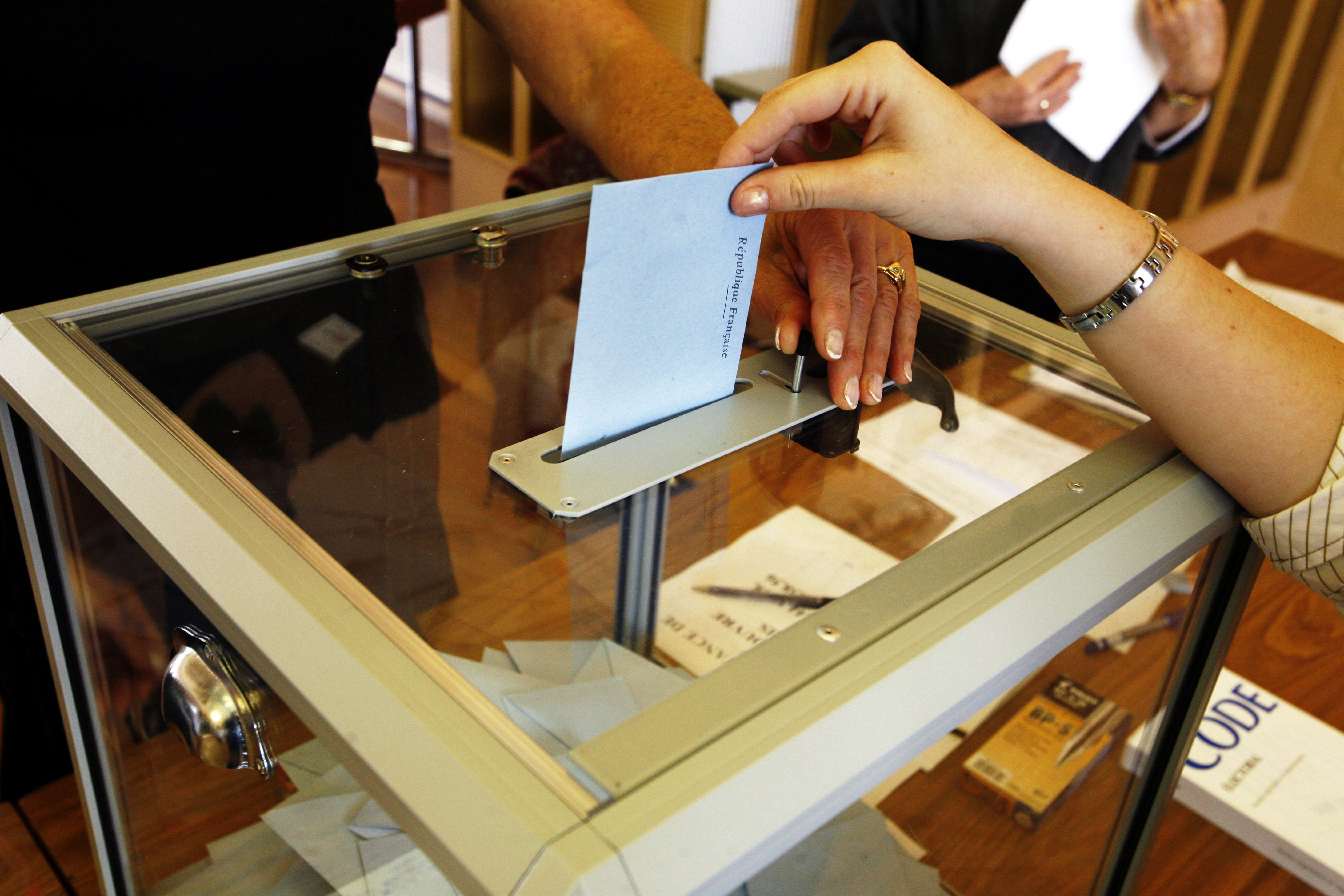
Image Source: Wikimedia Commons
Compiled by Himanshi Sharma
What was the result of the second round of the Elections to the Assemblée Nationale in France?
According to the data on Politico, the results of the second round of the election are as follows:
 Data source: Politico/CNN/Euronews
The CNN report states, “a left-wing alliance has won the most seats in the French parliament, thwarting the far right in a stunning result to Sunday’s second-round vote. Despite avoiding a far-right government, the result means France is plunged into political limbo, with no party reaching an absolute majority, leaving parliament gridlocked.” It also states that “the left-wing New Popular Front won 182 seats while President Emmanuel Macron’s centrist Ensemble alliance won 163 seats. The far-right National Rally and its allies, which took a commanding lead in the first round, slumped to third place due to tactical voting, winning 143 seats.”
How did the NFP emerge as the largest coalition in the elections?
Christian Edwards, in an article published on CNN, noted: “A month ago, the New Popular Front (NFP) did not exist. Now, it has won the most seats in the French parliament and could provide France with its next prime minister. The left-wing coalition chose its name in an attempt to resurrect the original Popular Front that blocked the far right from gaining power in 1936. Official results released early Monday show the NFP has done so again — winning 182 seats in the National Assembly, making it the largest bloc but short of an absolute majority, according to the French Interior Ministry.” In addition, a report on The Guardian highlights that ‘in the French elections, many left-leaning voters backed NFP candidates, bolstered by a “republican front” strategy after the RN’s strong first-round showing. To consolidate anti-RN support in potential runoffs, the NFP withdrew 132 third-placed candidates, with over 80 centrists also endorsing the NFP. Ipsos reports that 54% of Macron’s first-round supporters and 29% of Les Républicains voters switched to NFP when their candidate was from PS, Greens, or Communists. Switches were fewer with LFI candidates but still notable: 43% of Together voters and 26% of LR voters supported NFP.’
What is the composition of the French Parliament this year?
According to an article in Le Monde, ‘the new MPs will meet on July 18 for their first session. Only 208 women, compared with 369 men, will sit in the next Assemblée, representing just over a third of all MPs. This is the second time in a row that the proportion of women in parliament has fallen: There were 224 female MPs in 2017, but just 215 in 2022. The Nouveau Front Populaire left-wing alliance has the highest proportion of female MPs, with 41.2% of women, followed by Emmanuel Macron’s coalition, Ensemble. …. In contrast, and unsurprisingly, the RN has the most new MPs. Higher socio-professional categories are over-represented in the Assemblée, with 347 MPs classified as “Executives and higher intellectual professions,” i.e. 74% of active MPs…’
Will France witness any major complications in its attempt to create a “government of national unity”?
Sylvie Corbet’s article in Associated Press notes that “three major political blocs have emerged — none of them is close to holding a majority of at least 289 seats out of 577. Results so far have shown just over 180 seats for the New Popular Front leftist coalition, 160 for Macron’s Together for the Republic centrist coalition, and more than 140 for the far-right National Rally party. The National Assembly is the most important of France’s two houses of parliament. It has the final say in the lawmaking process over the Senate, which is dominated by conservatives. The split lower house will require lawmakers to build consensus across parties to agree on government positions and a legislative agenda. France’s fractious politics and deep divisions over taxes, immigration and Mideast policy make that especially challenging.”
CBS News points out that the complications are likely to occur as “Macron may seek an alliance with the moderate left, possibly with the Socialists and Greens, but not the hard-left France Unbowed party. He recently suspended a decree reducing unemployment benefits to appeal to the left. If no political deal is made, Macron might appoint a non-partisan government, needing parliamentary approval. The left faces internal divisions, especially after the Oct. 7 Hamas attack on Israel, with France Unbowed criticized and accused of antisemitism, which it denies. The Socialists outperformed France Unbowed and the Greens in the EU elections. Macron’s call for snap elections led to the formation of the New Popular Front, advocating for higher wages, reversing pension reforms, and freezing essential prices, causing market concerns.”
Why did Macron reject PM Gabriel Attal’s resignation?
The BBC, in its report, noted that “French President Emmanuel Macron has asked his prime minister, Gabriel Attal, to remain in post for the time being to ensure the country’s stability, after election results left no party with an outright majority. Mr Attal, who led the president’s Ensemble alliance’s election campaign, handed his resignation to Mr Macron on Monday, only for the president to refuse. Although Ensemble lost many of its seats in Sunday’s parliament election, it came second, behind a left-wing alliance but ahead of the far right, which had been expected to win. The unexpected result leaves French politics in deadlock, with no party able to form a government by itself.”
What are the options for Macron in resolving a possible political deadlock?
According to Politico, “Allies of the president are now looking for opportunities to exploit the uncertainty to assert their centrist agenda. Some think they’ve found a possible way through: by breaking up the already fractious and fragmented leftist alliance. The New Popular Front is a motley group of disparate left-wing parties with a hastily agreed policy platform and no clear leader. It includes the far-left France Unbowed, led by veteran firebrand Jean-Luc Mélenchon; the Communists; the Socialists and the Greens.”
What are the implications of the French Election for Europe?
A report on Politico cites that “For the EU, the French election result was good news – but also bad news.” It states that ‘Macron has been a huge presence on the European front, whether by reshaping the EU’s trade agenda, pushing for a more ambitious industrial defense and competitiveness agenda, or eyeing more strategic autonomy ahead of a potential second Donald Trump presidency. French politicians will also have the presidential election of 2027 on their minds while making decisions from now on.’ Citing Mujtaba Rahman, Europe head of the Eurasia Group, the report highlights that: “A weak …France poses a question about leadership in Europe…Macron has been constantly pushing for more ambition in Europe, pushing for more coherence and for Europe to become a more important geopolitical and geostrategic player in the world”..[and]..“With him fundamentally weakened at home, distracted by the need to form a government, it will be very hard to continue to play that role. He’ll be less of an ambitious player in Europe.”
, writing for The German Marshall Fund, points out that “The biggest uncertainty, however, stems from the upcoming budget negotiation. This is a massive challenge for a new government to tackle, given France’s tight state finances. The country’s ability to play a leading role in European defense or support for Ukraine will depend on whether the governing parties are willing to allocate funds for these purposes.”
References
- “France Poll of Polls.” Politico. Accessed July 9, 2024. https://www.politico.eu/europe-poll-of-polls/france/.
- “France Election Runoff Results.” CNN. Last modified July 7, 2024. https://edition.cnn.com/world/live-news/france-election-runoff-results-07-07-24-intl/index.html.
- “France Election: What Next?” CNN. Last modified July 8, 2024. https://edition.cnn.com/2024/07/08/europe/france-election-what-next-explainer-intl/index.html.
- “NFP New Popular Front: France Election Winner Mélenchon.” The Guardian. Last modified July 8, 2024. https://www.theguardian.com/world/article/2024/jul/08/nfp-new-popular-front-france-election-winner-melenchon.
- Imbach, Romain, and Romain Geoffroy. “Age, Gender, Profession: Who Are France’s New Members of Parliament?” Le Monde. Last modified July 9, 2024. https://www.lemonde.fr/en/les-decodeurs/article/2024/07/09/age-gender-profession-who-are-france-s-new-members-of-parliament_6678555_8.html.
- “France Election: Left and Far Right Gaining Ground, Macron’s Center Struggles.” AP News. Last modified July 7, 2024. https://apnews.com/article/france-election-left-far-right-macron-7c61d22e610c8ceef133e26bd8c847ee.
- “2024 French Election Results and Next Steps.” CBS News. Last modified July 7, 2024. https://www.cbsnews.com/news/2024-french-election-results-next-steps-macron/.
- “France Election Results: Analysis and What Comes Next.” BBC News. Last modified July 7, 2024. https://www.bbc.com/news/articles/c51ygevlylvo.
- “Emmanuel Macron and the Chaos After France’s Election.” Politico. Last modified July 7, 2024. https://www.politico.eu/article/emmanuel-macron-france-election-chaos-comeback-new-popular-front/.
- “Europe Elections 2024: France and Germany Face Political Uncertainty.” Politico. Last modified July 7, 2024. https://www.politico.eu/article/europe-elections-2024-france-germany-emmanuel-macron-olaf-scholz-marine-le-pen-debt-crisis/.
- Gesine Weber, “European Implications of the French Elections,” German Marshall Fund of the United States. https://www.gmfus.org/news/european-implications-french-elections.
- Sylvie Corbet, “France’s election ends up with no clear majority. This is what could happen next,” Associated Press, July 8, 2024. https://apnews.com/article/france-election-left-far-right-macron-7c61d22e610c8ceef133e26bd8c847ee


Leave a reply


Politeia Research Foundation is a non-profit initiative that reflects on global and public policy issues, and engages with plural worldviews and diverse ideas.